

Alcohol-free drinks have moved from the back of the soft drink fridge to the front of the cocktail list. The venues earning from them treat the non-alcoholic list as a menu in its own right, priced on craft rather than on cost.
A few years ago, the guest who was not drinking alcohol had three options: a soft drink, a juice or a sparkling water with lime. In 2026, more Australian venues are treating that guest as a customer worth designing for. A well-built non-alcoholic drinks menu can lift spend per head, keep a whole table ordering through the night and give the bar team something to sell. A thin one leaves money on the table and tells the guest they were an afterthought.
What the evidence actually shows
The long-run data points to steady change rather than a sudden boom. According to the National Drug Strategy Household Survey figures published by the State Library of NSW, the proportion of Australians aged 14 and over who have never had a full glass of alcohol rose from 9.3 per cent in 2001 to 14.9 per cent in 2022–23. The survey notes that “the number of people abstaining from alcohol has gradually increased over time”, but also that “a majority of people in Australia do consume alcohol”.
Moderation is not universal, and venues should not assume every younger guest is drinking less. The Australian Bureau of Statistics’ 2022 alcohol consumption data found that more than one in three (36.1 per cent) young adults aged 18 to 24 exceeded the Australian Adult Alcohol Guideline, compared with 26.8 per cent of all adults, and one in three (33.7 per cent) drank five or more standard drinks on a single day at least monthly, more than any other age group. The lesson for operators is that the same table may hold a guest ordering spirits and a guest ordering nothing stronger than tonic, and both expect a considered list.
Category data supports the shift. Drinks research firm IWSR, reporting international market data that includes Australia, found in its research on no- and low-alcohol wine that no-alcohol wine volumes in Australia grew at a compound annual rate of 18 per cent between 2019 and 2024. Operators are responding. According to Lightspeed’s 2026 State of Hospitality Report, alcohol-free beverages (36 per cent) ranked among the top three trends operators are prioritising this year, alongside bottomless drinks (37 per cent). That figure is vendor data, and the report does not publish its sample size.
Price the craft, not the liquid
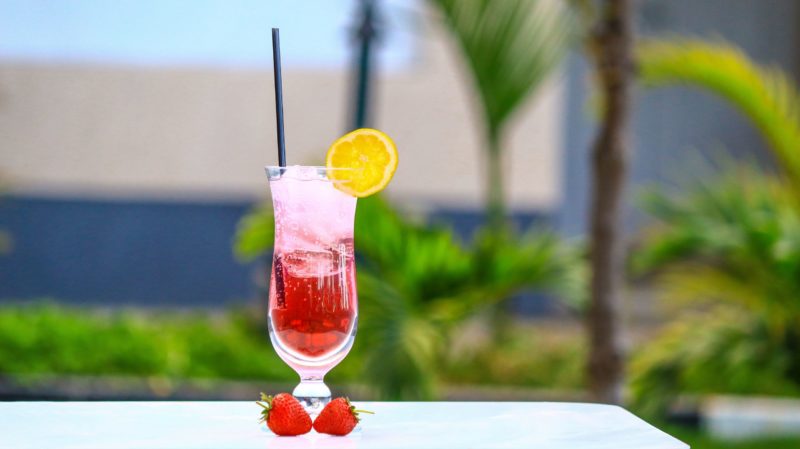
The margin case rests on one principle: guests will pay for skill, not for volume. Restaurant & Catering Australia’s guidance on alcohol-free drinks puts it bluntly: “Customers will pay for craftsmanship, not for juice in a tall glass”. It adds that guests “are not willing to pay the same price for basic soft drinks or plain juice”.
That gives the list a clear structure. House-made drinks with technique behind them, such as clarified juices, shrubs, ferments, cordials and tea infusions, can be priced close to a cocktail because the guest can see and taste the work. Premium alcohol-free spirits, wines and beers sit in the middle, priced against their alcoholic equivalents. Soft drinks and juices stay at the bottom, at prices that do not feel like a penalty for not drinking.
A non-alcoholic list that earns its margin is built like a cocktail list: fewer, better drinks, each with a reason to exist and a price that reflects the work.
What Australian venues are doing
Some of the clearest examples come from venues that put alcohol-free drinks at the centre of the offer. According to The Weekend Edition’s coverage of Brisbane’s non-alcoholic bar and restaurant offerings, The 203 in Fortitude Valley sees “around one in five drinks ordered being non-alcoholic”, while Venner in West End offers a non-alcoholic pairing of five alcohol-free cocktails, made with Never Never Distilling Co., for $65 per person, with each drink also sold separately.
Pairings are worth noting because they solve a familiar problem. When one guest at a degustation takes the wine match and another drinks water, the table’s spend and experience diverge. A priced alcohol-free pairing keeps both guests inside the same experience and the same check.
Build it into the bar, not around it
The commercial risk with a zero-proof list is not demand; it is execution. House-made syrups, shrubs and ferments take prep time, shelf space and stock control, and they lose value quickly if they are made in quantities the venue cannot sell. The same batching discipline that speeds up cocktail service applies here, as we set out in Batched Success – How to Streamline Beverage Service. Pre-batched bases with a short finishing step let the bar serve an alcohol-free drink as quickly as a gin and tonic.
Presentation matters as much as recipe. Glassware, garnish and the way staff describe the drink signal its value. If the non-alcoholic option arrives in a highball with a straw while the cocktail beside it arrives in a coupe, the guest notices.
A six-step zero-proof list
- Count what you already sell. Pull three months of sales for soft drinks, juices, mocktails and alcohol-free beer and wine, and note how many tables include at least one non-drinker.
- Write a short, tiered list. Aim for four to six house drinks with technique, two or three premium alcohol-free products and a tidy soft drink range, rather than a long list of variations.
- Cost every drink to the garnish. Include prep labour and wastage on house-made components, then price the craft tier against your cocktails rather than your soft drinks.
- Batch the base, finish to order. Build recipes that can be prepared ahead and finished in under a minute during service.
- Give it equal standing on the menu. Place the list beside the cocktails, use the same descriptive language and avoid labels that imply a lesser choice.
- Train the pitch. Teach staff to offer the alcohol-free list as readily as the wine list, including the pairing where one exists, and review the sales mix monthly.
The guest who is not drinking has always been at the table; the difference now is that they expect to be served properly. At Alto Cibum, beverage strategy and menu engineering are part of how we keep track of food and beverage trends for our clients and turn them into lists that work in service and on the profit and loss statement. If your non-alcoholic offer still stops at the soft drink fridge, it is one of the simplest places to find new margin.
Robert Clifford, Managing Director, Alto Cibum
Make Your Beverage Menu More Profitable
Alto Cibum helps hospitality operators develop profitable beverage menus through menu engineering, pricing strategy and practical bar operations that balance guest experience with commercial performance.
Talk to Alto CibumKeep Reading
Batched Success - How to Streamline Beverage Service
Learn how batching techniques can improve bar efficiency, speed up service and support more consistent drink preparation.
Pricing Your Menu Items
Understand how menu costing and pricing decisions can support profitability without compromising the guest experience.
Adapting to Inflation: Strategies for the Food and Beverage Industry
Explore menu pricing, cost control and upselling strategies that help food and beverage operators protect profitability.
Stay up to date with Alto Cibum
Practical insights on hospitality strategy, operations, trends and design. Follow Alto Cibum on LinkedIn or subscribe to our fortnightly newsletter.