

Eighteen days into the card surcharge ban, about 17 per cent of cafés tracked by one survey have lifted their flat white price, but the venues that protect margin best will reprice deliberately, line by line, rather than all at once.
For more than two decades, many Australian venues treated the card surcharge as a neutral pass-through: the guest chose to tap, the guest paid the fee and the menu price stayed clean. That arrangement ended on 1 October 2026. The card surcharge ban moves the cost of accepting cards back inside the business, and every venue now has to decide where that cost lives, in the menu, in a cheaper payment plan or in a thinner margin. That decision deserves more care than a blanket price rise.
What changed on 1 October
According to the Reserve Bank of Australia’s surcharging FAQs, surcharging on the eftpos, Mastercard and Visa networks was removed from 1 October, and American Express, UnionPay and PayPal have also removed surcharging, with PayPal’s change taking effect on 5 October. The ban covers surcharges added because a customer pays by card. It does not cover weekend surcharges, public holiday surcharges, booking fees or service fees.
The RBA’s Conclusions Paper on surcharging estimates that 16 per cent of Australian merchants surcharged card payments in 2024/25, collecting around $1.8 billion, of which about $1.6 billion was paid by consumers. It expects the aggregate effect on consumer prices to be small, at around 0.1 per cent. An economy-wide average, however, says little about an individual café that surcharged every card payment and must now recover that cost another way.
What the first fortnight of price data shows
Early data points to a split market rather than a uniform rise. As ABC News reported on early coffee price changes, Small Flat White, an online platform that tracks coffee prices across more than 1,500 cafés, found that about 17 per cent were charging more for a flat white than before 1 October, typically by 50 cents, or almost 10 per cent of the price. The same survey found that 4 per cent of cafés cut their prices, leaving an average increase of 1.5 per cent across the 1,511 cafés surveyed, according to Capital Brief’s coverage of the café pricing data.
Separate data from ordering app Hey You and Westpac DataX shows the average regular latte, flat white or cappuccino rose from $5.02 to $5.05, an increase of 0.7 per cent. Exactly 10 per cent of cafés lifted at least one core coffee price, and 39 per cent of those raised it by 50 cents or more. In New South Wales, 11.5 per cent of cafés increased coffee prices, compared with 8 per cent in Victoria, as detailed in Nine’s report on coffee prices following the surcharge ban. Both datasets come from private platforms rather than official statistics, and they measure different samples, so they should be read as directional.
The pattern is consistent: most venues held their prices, and those that moved tended to round up. The industry is divided on what that means. Wes Lambert, chief executive of the Australian Restaurant and Cafe Association, told ABC News: “Ultimately, we think that the RBA kicked an own goal in this.” Westpac chief economist Luci Ellis described the change as “a one-off, not inherently inflationary”.
The coffee price is the wrong place to start
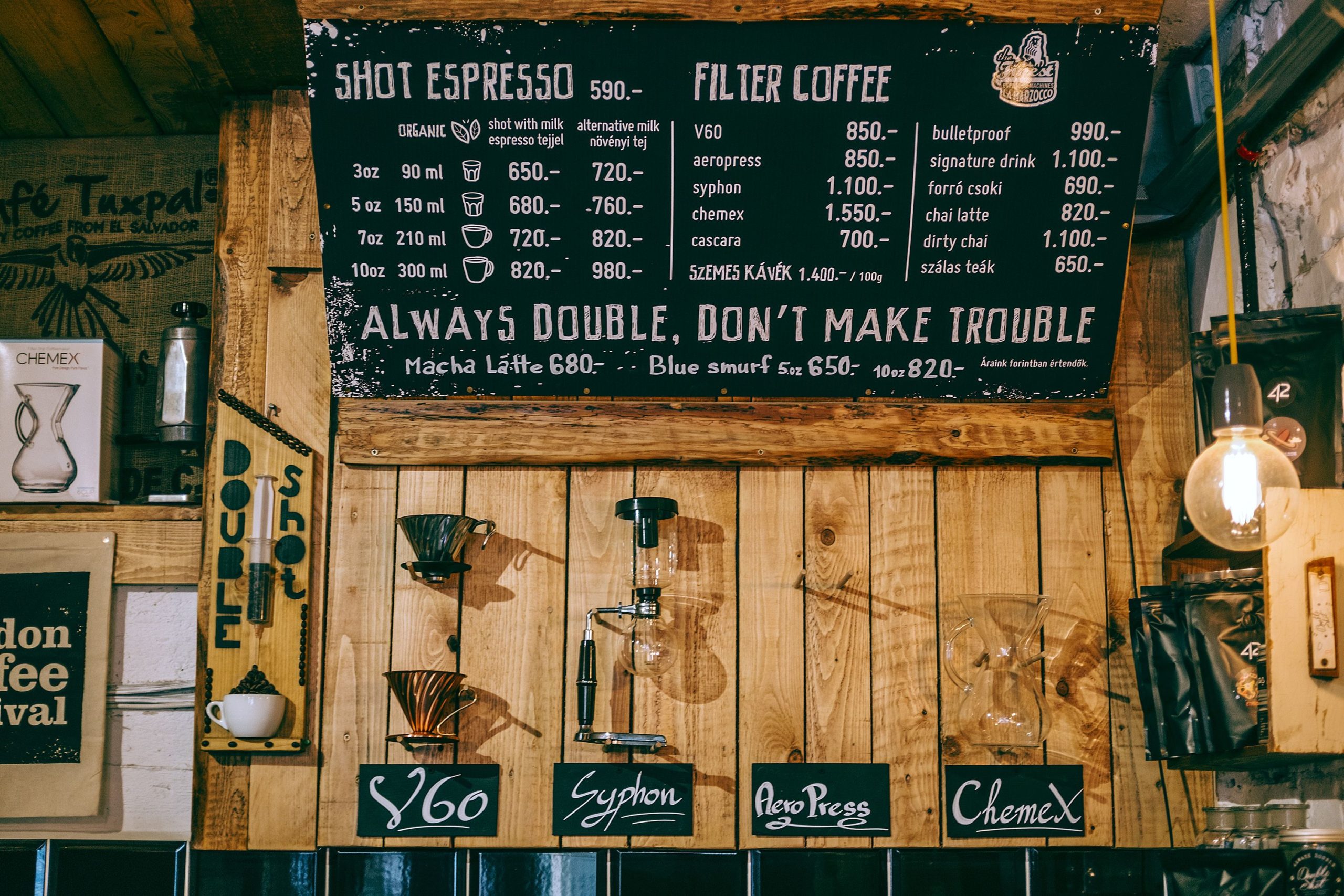
The most watched price on a café menu is rarely the best place to recover a fee. Sydney café owner Philip Barbaro told ABC News in its report on how small businesses are covering merchant fees that his group pays “about $150,000 in merchant fees per year”, yet “in my very competitive market in the city we have not touched the price of our coffee, but there were other items on the menu we had to increase this week”.
That is menu engineering under pressure: protect the anchor price guests compare between venues, and recover margin on items where price sensitivity is lower and contribution is higher. The principles are the same ones we set out in how to cost your menu, now applied to a cost that used to sit outside the menu. A 50-cent rise on every coffee is a price increase. A considered shift across the menu is a pricing strategy.
The surcharge did not disappear. It moved onto the menu, and the menu is where guests compare.
What you can still charge, and how it must be shown
The ban does not remove every fee. The ACCC’s card surcharge guidance confirms that businesses may still charge fees or surcharges that are not based on how a customer pays, including hospitality weekend and public holiday surcharges. It also states that businesses can adjust prices to recover the cost of accepting cards but “must not give false or misleading information about prices or the reasons for any price increases”.
Day-based surcharges still have display rules. Under the ACCC’s price display requirements, a café or restaurant menu must carry the words “A surcharge of [percentage] applies on [day or days]”, and a surcharge that applies every day of the week must be built into the displayed price. Cash or PayID discounts are permitted, but the ACCC’s guidance on card surcharges says they should be clearly disclosed before customers choose to book, order or pay, and the displayed price must be the full price. The clearest risk under the card surcharge ban is relabelling. The ACCC warns that describing a card payment surcharge as another type of fee or charge “may be engaging in misleading conduct”. If a fee applies to every transaction regardless of day or service, take advice before keeping it.
Where the margin comes back
The other half of the reform sits on the cost side, and for many venues it matters as much as the card surcharge ban itself. As outlined in the RBA’s announcement of its payment regulation reforms, lower caps on interchange for domestic card transactions also took effect on 1 October. Consumer credit interchange is capped at 0.3 per cent, and debit at 8 cents or 0.16 per cent, according to the RBA’s Conclusions Paper on interchange fees. Before the change, small merchants faced credit interchange rates of up to 0.8 per cent, while the largest merchants paid as little as 0.18 per cent.
Those savings only reach a venue if its provider passes them on. A survey of Australian Hotels Association members, cited in CommBank’s analysis of the end of card surcharging, found that around one in three were paying over 1.6 per cent per transaction and two in three over 1.2 per cent. CommBank, itself a payment provider, says it is reducing its standard merchant service fee from 1.10 per cent to 0.99 per cent, including GST, for eligible customers. From 30 October 2026, card networks and large acquirers must begin publishing specified information about card payment fees, which should make comparison easier, as explained in the RBA’s implementation FAQs.
A repricing sequence for the next 30 days
- Find your effective card rate before touching the menu. Divide last month’s merchant fees by card turnover. That figure, not the old surcharge rate, is the cost you are recovering.
- Ask your provider whether the lower interchange caps have reached your merchant service fee. If they have not, use the fee information published from 30 October to compare plans.
- Protect the anchor items. Hold the prices guests compare between venues, usually coffee, a pint or a house wine, and recover margin on items with lower price sensitivity.
- Reprice by contribution, not by percentage. Use your sales mix to place increases where volume and margin can absorb them, rather than adding a flat percentage across the menu.
- Audit every remaining fee and its wording. Check menus, booking platforms, online ordering and receipts for leftover surcharge references, and confirm that any day-based surcharge is displayed as the ACCC requires.
- Watch item volumes for four weeks. Track sales after each change so you can see whether demand has moved before making a second adjustment.
Pricing is where small decisions compound, and this reform has put the full cost of accepting payments back inside every venue’s margin. At Alto Cibum, menu engineering and margin modelling are core to our food and beverage consulting work, and they work best when sales mix, food cost and payment cost are read together. If you have adjusted prices since 1 October and are not sure the new menu is earning what the old surcharge did, we can review the numbers with you and identify where the margin should sit.
Robert Clifford, Managing Director, Alto Cibum
Need to Protect Your Venue's Margins?
Alto Cibum helps hospitality operators review menu pricing, analyse costs and improve profitability through practical menu engineering and commercial strategy.
Talk to Alto CibumKeep Reading
Right-Sizing the Plate: A Margin Strategy
How portion control and thoughtful menu decisions can protect margins without compromising the guest experience.
Cut Twenty Per Cent of Your Menu and Watch Your Kitchen Get Better
Why a more focused menu can improve kitchen efficiency, consistency and profitability.
Name the Farmer: Provenance Detail Is the Cheapest Pricing Power You Have
How genuine supplier relationships and food provenance can build diner trust and strengthen menu positioning.
Stay up to date with Alto Cibum
Practical insights on hospitality strategy, operations, trends and design. Follow Alto Cibum on LinkedIn or subscribe to our fortnightly newsletter.